
Keeping Life in Antiques: How We Listen to Music in the Age of Streaming
Last week Kanye West announced he would be mysteriously debuting something. As advertised and expected, it was a grand reveal of "Famous," The Life of Pablo's highly divisive Taylor Swift (more than) name checking album cut's live and or music video premiere. Controversies abound, the video features an arguable list of 2016's biggest celebrities' naked wax figures all in bed with West. Amazingly, despite the continued tinkering of TLOP, an announcement of a tour, and continued silliness in the media, Ye is still needing to make a splash.
The responses have of course been varied, with the complaints best summarized by Lean Dunham:
Like many pop culture addicted Americans, I wait with bated breath for what Kanye West will do next. Aside from his Twitter mayhem, he has created some really "next level shit" as the kids would say. I could also happily watch Kim Kardashian West chip the paint off a window ledge for hours and be fascinated. I admire that whole family, love the way they depict women as better in numbers and masters of their own destiny. I'd spend all summer at Kamp Kardashian. But it's possible to hold two competing thoughts in your mind and the Famous video is one of the more disturbing "artistic" efforts in recent memory. (via Facebook)
It isn't surprising that reactions to West's newest 'artwork' is receiving criticism and responses as divisive as the song itself. What is interesting in how in a digital streaming era something like an "event" music video is still attracting large audiences, even from the ever enigmatic West.
This isn't exactly a modern problem, or a Kanye problem. I can still remember being a young teenager watching the VH1 Top 20 Music Video Countdown which often featured teases and hype behind new music video releases. I was "unavailable" until that "Mr. Brightside" video dropped, and I even made a special trip to the library to watch the CD-ROM Spider-Man soundtrack to see Chad Kroger's "Hero" video. We, as listeners, are attracted to spectacle, to challenges, to finding Easter eggs. And we love a new release music video. In fact, a huge percentage of online streaming is from people "listening" to YouTube videos. But really, how do we listen to music?
I've identified as a poet for more than half my life, and with that has come not only the thickened skin of endless rejection letters from publishers, but, at least early in my wearing that identity, also caught quite a bit of teasing for it. Sure, I was probably a bit of a spas in middle school but I hardly think that justly earned me nicknames like Triple Tee (Two-Ton Tony) or even Cinco Tee (Two-Ton Temper-Tantrum Tony). I often found retreat in the private moments shared between a see-thru green Sony Walkman, or in my bedroom with homemade cassette tapes turning their wheels. That was the first way I listened to music.
The whole point of that digression was to tell you I was more than prepared for the way teens treat me when I am working at a local high school: they render me about twenty years older than I am, and, while this is totally subjective, 100% more lame than I am. Occasionally, I'll get bold and name drop how much I enjoy Nicki Minaj, or mention that I got that new Vic Mensa EP the day it came out. Blank faces, or worse, having to bite my tongue when a young man insists that "Future is WAY better than Beyonce." Luckily, I'm not on that job to find validation; for what it's worth, their language arts grades have improved.
However, as it stands in my mid-twenties, I did not expect to be as out of touch with my college students. I teach introductory level writing courses, so I'm only a handful of years older than my demographic. Surely we listened to music in the same way, right? Surely we listened to much of the same music?
Barring Beyonce (obviously) that was not the case. Even Detroit artists I would casually reference trying to sound cool mid-lecture on the value of rhetorical awareness didn't catch so much as a glint of recognition. "Hey guys, did anybody else go see that Big Sean show this weekend? Sorry I haven't returned your papers yet, he brought Dej Loaf & Royce Da 5' 9" out and it's still freaking me out." Who? What? Whatever, Professor D.
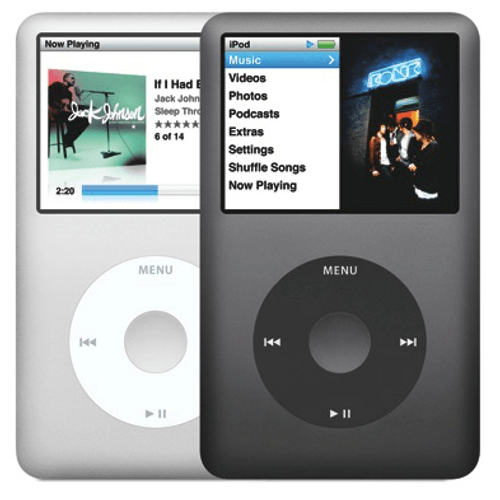
At the end of this past semester, I set up a picnic so students could come pick up their final writing portfolios outside of the campus center, where I, in sunglasses and drinking a Caprisun juice pouch, sat waiting with the summer jams of Sugar Ray's 14:59 playing out of my iPod Classic.
The set up for this anecdote alone makes the perfect pitch for why the iPod Classic is a must have device: when I want to win some laughs looking sort of silly in the late-spring sun I've got bad 90s pop-rock bands cued up. I could never devote the ever-precious space on my phone to (no matter how good) Sugar Ray's discography. However, with the Classic's massive memory I don't need to make decisions like that; it's all right there inside: bad YouTube rips of instrumental rap songs for me to freestyle (poorly) over, operas, recorded poetry, that disgusting Spider-Man soundtrack, and also every song that I've spent tons of money and even more time curating. My taste, at my fingertips. All I need is headphones and a good charge and I'm set. Right?
"Literally Professor D, what is that?" asked one of my students.
"Well Fatima, this is, obviously" I was sure to stress this for full humorous effect, "the 1990's finest beach band: Sugar Ray. How do you not know the song "Every Morning"?"
"I know what the song is! Is this like an old iPod?"
Now, I'm still young. I know that. I'm not even remotely close to freaking out as I age. But, to call this device the "old iPod" with such a sneering disdain? I had just gotten over Apple discontinuing their miracle product (by securing an aftermarket unopened one which is locked in a vault waiting for mine to tragically die) but now to hear someone not even five years younger than me treat it like such an anachronism? That was tough. That aged me.
College and high school students, who somehow despite not having jobs or are managing to make even less money than I do (and again, I'm a poet and I write for free on the Internet), have spent a huge chunk of this past year trying to convince me streaming is the way to go. Not just them: favorite artists like Beyonce, Kanye, or Deakin making albums that (start out at least) are exclusive to streaming.
I can barely afford my bottom-tier cell phone service and it's got the slowest, most unreliable mobile data. Since I have a discounted membership to TIDAL, that would be my platform. I couldn't get through Lemonade more than twice without finishing off my precious gigabyte of 4G service.
"But you can have every song you've ever wanted!" They shout in favor of streaming services. So do I, I shout back shuffling through my iTunes library. We have this urge to need everything, ever, always. My high school students are especially guilty of this; "what are you guys listening to?" Future, always Future, and now that song by Desiigner. "Anything else? Checking out cool, weird bands using Spotify or Apple Music's dynamic recommendations?" Nope, just Drake, or Rihanna. There's lots of cake going around, and nobody is eating it.
Another interesting trend I've noticed in "the youth" (I'll go ahead and age myself some more) is that their phones can't hold a charge for more than two hours. That isn't a weird ageist error programmed into iPhones or androids; that's how much use they are getting. Why then would you lump on top of the dirge of social media and texting that batteries are being taxed by a constant data stream of music? Last month I drove to Eau Claire, Wisconsin; the round trip was 20 hours. Last weekend I flew to California for a friend's wedding. I recognize that this is hardly scientific, but my iPod Classic gave me nearly 30 hours of music, every song I wanted to hear, without running up a data fee OR requiring a charge. I didn't have to worry about finding a place to plug in just to eek some life back into my device, either.
I recognize the convenience of streaming; I really do. I don't mean to seem so curmudgeonly about it, either. I use TIDAL. I wouldn't if not for the discounted subscription rate, but I'll admit I enjoy having everything at my office computer on days I forget my iPod, or I want to listen to something not on the small hard drive of my phone. But that doesn't paint a nice picture for how we listen to music. Have you ever head a song and really thought, boy, I want to sit in front of a computer and just have my back straight to really get to the core of this song? Of course not!
Not quite as recently, I was driving between Detroit and where my parents live in Northeastern Ohio; not a terribly long trek and I was feeling sentimental so I opted for the more scenic (and rural) Route 2 in lieu of the turnpike. With the mighty Lake Erie to my North and sun setting behind me, I found solace in a number of excellent Numero Group compilations I'd recently downloaded: soul and rhythm & blues artists hailing from Detroit and Columbus respectively, plus a few gospel albums, and their most recently Outlaw Country collection. Made for a stellar playlist to enjoy the late winter scenery of the great Midwest. The cost of all this scenery was my phone found itself largely disconnected from cellular service for most of the drive. All love to Northern Ohio, but I'm not trusting their radio stations to have had what I wanted at that exact moment. I'd made my playlist. Since I was alone, I had to commit to that playlist. Had I relied on streaming, not only would I have lost my playlist, I wouldn't have had any options beside the whistling of the wind against the open windows. This is a challenge we don't often allow ourselves to accomplish: to really listen to a whole set of music instead of jumping around. It was a truly gratifying way to listen to new music.
Let's jog back to that trip I recently took to California. While I was there, I got to see some old friends who I haven't seen in a few years. We used to live together, and during that time we shared a lot, so naturally, we were pretty to keen to each others' taste in music. I was surprised after arriving in Oakland via the Bay Area subway system to find my friend, Ian, his Prius, and a curated playlist of excellent oldies to listen to while we drove around old haunts. It was a perfect welcome home.
Unlike Spotify or TIDAL, Ian knows me. I know Ian. Metadata and algorithms don't know anybody, no matter how desperately the programmers want you to think they do. I also know that Ian knows music, so when he puts some music on, I know I should listen because I'll probably like it. In a way, he is the opposite of why I don't listen to Pandora (I put on Jack White radio because I want to listen to Jack White, not Disturbed, for example): I'll take that related song, I'll take that recommendation. Our commerce about music becomes truly social, unlike any social media platform.
How I feel about streaming services falls somewhere in the middle of a style over substance debate and a conversation about quality over quantity. Having everything is nice, but you don't always want everything, and if you know what you want, why not always have it? I don't ALWAYS listen to Streetlight Manifesto, for example, a band who I obsessed over during high school, but I do always enjoy the memories scrolling past their name in my library gives me. Sure, having a flashy app with artist-curated or exclusive content is cool, but so is taking ownership of your listening process. Instead of letting your streaming service recommend you cool music, ask a friend, actually communicate with people about bands and music.
You don't need every song if every song you have is your favorite.
Image: Mac9to5